The body has been asking for less since the light began to shorten, and we keep answering with more.
December in the plains is a slow business. The mornings are grey, the evenings arrive early, and there is a heaviness in the limbs that no amount of willpower talks out of you. In the Himalaya the cold asks a different question — how little can you do, and how well?
The answer is the same in both places. Less. But less, held well.
Even the mind knows it. It reaches for the hour of the evening and turns inward without being asked.
We are used to measuring a practice by effort — how much you held, how long you sat, how far you went. But effort is only one kind of fuel. There is another kind: the fuel of a body that has been allowed to recover. One of these burns hot and short. The other lasts the whole winter.
Rest Is Not Laziness
There is a lie we tell ourselves, and it is a generous lie, so it takes a long time to catch.
If rest is laziness, then wanting rest is weakness. And a person who wants rest is a person who is not trying hard enough.
But the tradition says otherwise. The Hatha Yoga Pradipika says that savasana, the posture of rest, removes fatigue and brings rest to the mind, and counts it among the postures a practice is built on. The old texts are full of small instructions about entering and leaving practice — how you come in matters as much as what you do once you are in.
And the plain physical truth is simpler than any philosophy. A body that is not rested cannot do what it did yesterday. Many find that practices they thought they had lost return when they stop forcing them.
Rest is not the opposite of practice. Rest is what makes practice possible.
Tapas, the steady heat of effort, without rest is not discipline. It is the burning of the lamp instead of the lighting of it.
What the Slow Practice Is
Two forms are worth naming, because they are the ones people ask about most.
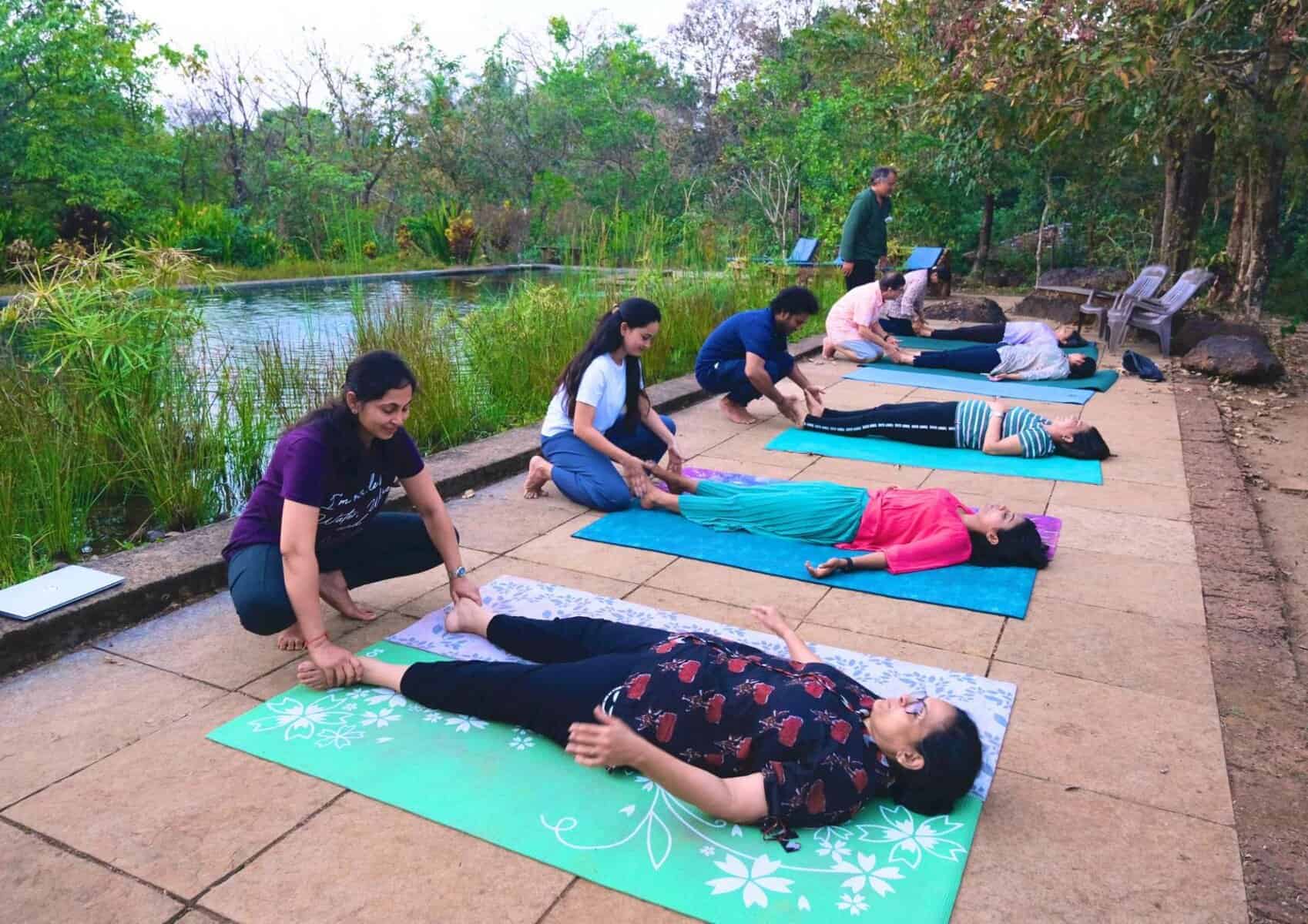
Restorative practice holds the body in supported shapes for longer, with bolsters, blankets and walls doing the work the muscles should not have to do. Yin practice holds a shape for minutes, working not the muscle but the deeper tissue, the fascia, the patient places where the body keeps its holding.
Neither is passive. Both ask for something most of us find hard — the willingness to stay still when nothing is happening, and to let the ground hold you.
Put a warm cloth over the eyes. Let the breath go where it goes. Let the shoulders drop, and drop them again, because they came back.
If you have never held a shape for five minutes without moving, the first time will feel strangely long. It is not the shape that is difficult. It is the not-moving.
The Sea Knows Something About Winter
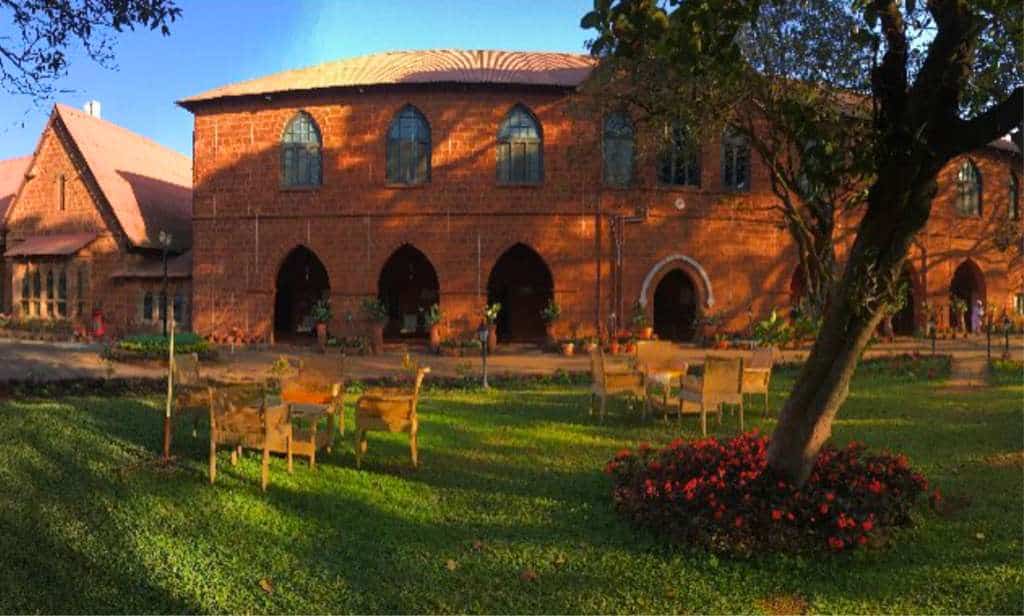
Our winter retreats are held by the sea in Goa, where the water is warm enough and the light is soft enough to do almost nothing well. The horizon does not ask you to improve. It simply remains, wave after wave, and lets you do the same.
If you would like to practise with us — online, or by the sea — we would be glad to sit with you.