Somewhere between the last of the cold nights and the first hot afternoon, the air changes. You feel it on the skin before the mind agrees.
Ayurveda, the ancient Indian science of living in rhythm with the seasons, has a name for what the body is doing. It is kapha — the dosha of earth and water, of heaviness, steadiness, and the slow settling of things. By the end of winter it has gathered, like silt on the floor of a river after the flood.
Most of us know it without the vocabulary. We wake later than we should. We want warmer food, longer hours, less movement. The limbs feel pleasant and slow. So does the mind. It is the same heaviness in both.
Lightening Is Not Punishment
You do not lighten the body by scolding it. You lighten it by subtraction.
- Choose less. Lighter, simpler food. Green, bitter, astringent. Less of what was only comforting because it was cold.
- Move before the day asks anything of you. Kapha wants to be woken, not managed.
- Let the sun reach the skin. A few unhurried minutes with no screen and no purpose.
- Massage the skin dry and upward — garshana, the old Ayurvedic dry massage. It wakes the skin, and many find the whole system follows.
None of this is a punishment. It is housekeeping. The season is turning, and the body is allowed to turn with it.
What the Mind Is Carrying
Kapha in the mind looks like a soft refusal. The heaviness is rarely in one place — it is in the mornings you do not want to begin, in the hours that pass without your being in them, in the way a habit can become a hiding place and be mistaken for a discipline.
Ayurveda is gentle here. It does not say: try harder. It says: make it lighter, make it warmer, make it more alive. Which is why spring is the season for new promises rather than harder vows.
Choose a sankalpa — a resolve kept quietly in the mind — and make it small enough to keep. Go barefoot when you can: grass, earth, sand, the body learning the season by touch before it learns it by thought. And sit outside, even for ten minutes. The eyes need horizon as much as they need light.
The result is not enthusiasm. Spring does not deliver enthusiasm. It delivers the willingness to begin again, which is quieter, and lasts longer.
The Festival That Ends the Winter
Holi has always belonged to the turn of the season. The old story tells of the boy Prahlad, who sat in Holika’s fire and was not harmed; the bonfire on the eve of Holi still remembers him. The people who came out to celebrate did not come with grief. They came with colour, and drum, and laughter, and pigment thrown into the grey.
The colours themselves are old — earth, turmeric, indigo, the red of sindoor at a temple door.
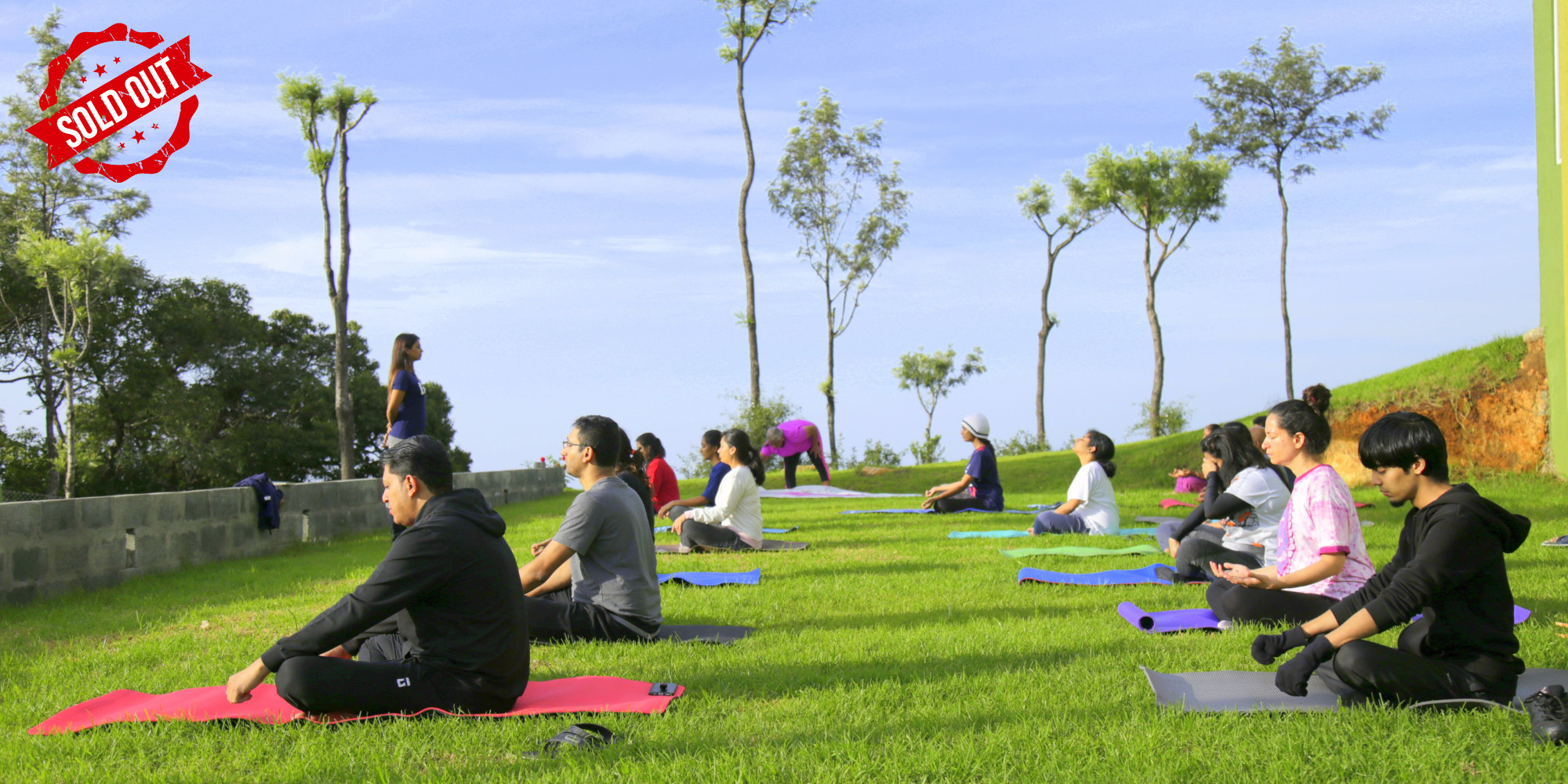
Imagine a green hill in March. Mats on the lawn, the light coming low through the trees, the slope holding the smell of warm dust and new grass. That is the festival, stripped of everything it does not need.
Colour is not decoration. It is the body saying yes to being alive again.
And there is something in the festival that the photographs cannot hold — the permission in it. For one afternoon, nobody has to be sensible. Nobody has to be composed. The year’s first heat gets answered with colour thrown at somebody you love, and everybody becomes a child for an hour, and the body remembers what it is for.
After the Stillness
We hold a great deal through the cold months. We call it discipline. Sometimes it is only the season holding us.
Spring is a subtraction — of weight, of noise, of the things we kept because they were easier to keep than to release.
And when the body is lighter, so is the mind. The two have never been as separate as we pretend.
We have always found that spring asks us for less and gives us more. Fewer rules. A longer walk. A window left open. The first barefoot morning of the year.
Then the light comes back, and there is somewhere to go.