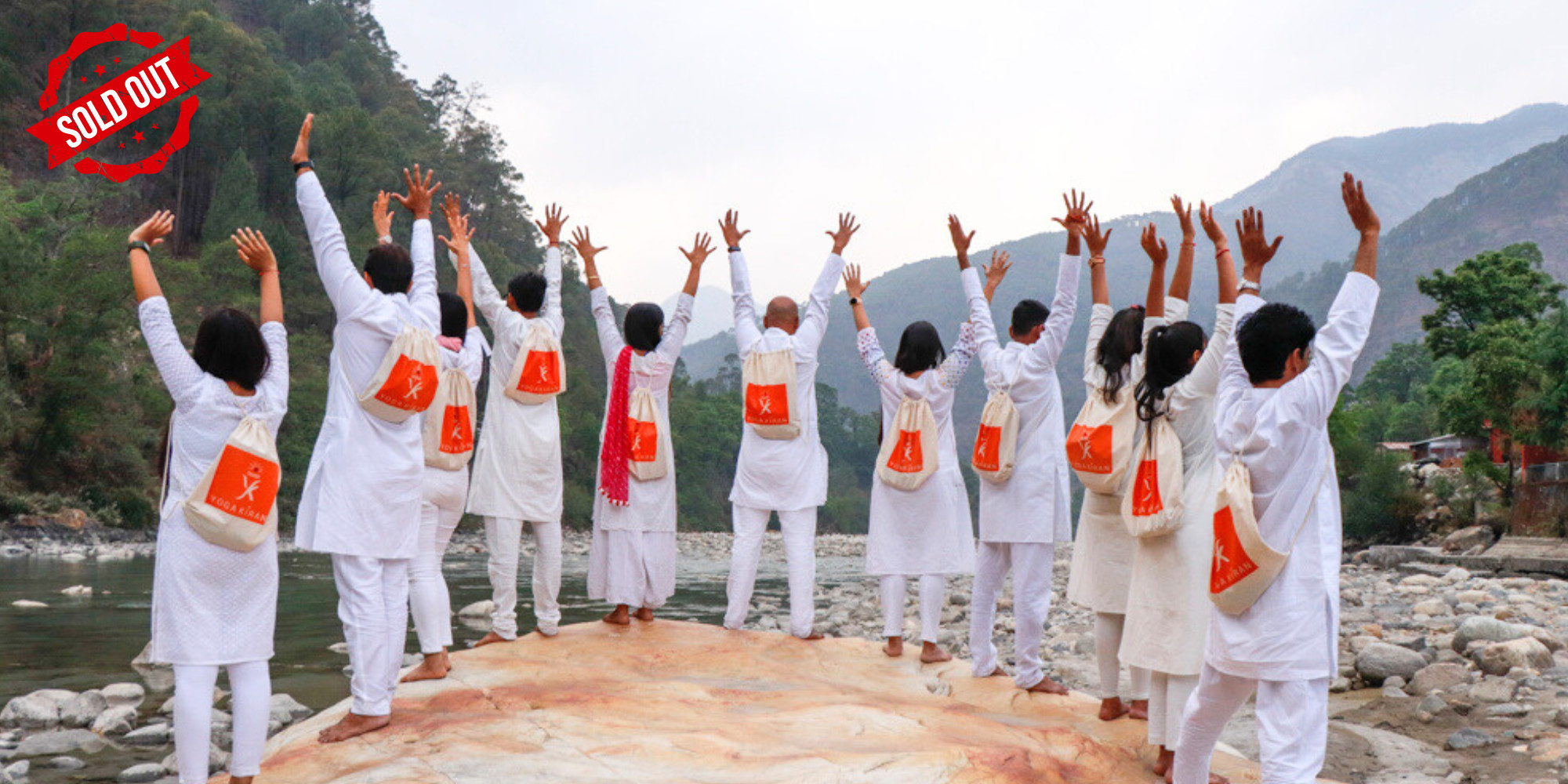
Every year the world sets aside one day to remember yoga. On 21 June, in cities and villages, on mats and on grass, people bend toward the same idea.
It is a good day. The United Nations chose the solstice for it — the turning of the longest light — and there is something right about a practice being remembered when the year is at its brightest.
But there is a question inside the celebration.
A Day Is a Sample, Not a Home
Yoga for one day is like fasting for one day. Instructive. Not transformative.
One morning of practice tells you what your body feels like when nobody is arguing with it. Then the week resumes, the body returns to being argued with, and the taste stays behind in the room.
There is a generosity in a single day, too. Nobody is asking you to be a different person by evening. The pressure is off. You can find out what this is without signing your life over to it — and that is how many people meet it: at a festival, on a holiday, standing in the wrong clothes, and still recognising something.
Some come for the day and find the taste. Some find the taste and stay.
The Hour Is the Smallest Part
The yoga of the day is the visible part. Most of the practice is invisible.
- The way you breathe while you are waiting for something.
- The way you listen when you are tired.
- Whether you keep the small promise you made to yourself in the morning.
The poses last an hour. The character takes years. The old yogic texts never describe it as something that happens on a particular day.
There is a reason they speak of the yogic life as a lifetime and not a session. A practice is measured by what it has made of the person who has been doing it for years — not by how the first morning felt.
The Morning After
What happens on 22 June matters more than what happens on 21 June.
A practice that appears only when there is a day for it is a performance. A practice that is there on an ordinary Wednesday, when nobody is watching and the light is bad and no one will know — that is the real thing.
And a practice that lasts is held by something quiet: a sankalpa, a resolve taken in the mind and kept without announcement.
A sattvic life, in the old vocabulary, is one that is simple and not run by appetite or agitation. It has less to do with what you eat than with how much is happening to you.
The Ordinary Wednesday
Most of yoga happens on a day with nothing written on it. A Wednesday with a train to catch. A morning with nobody watching and no photograph to take.
That is where the practice gets tested. Not in the hall with the light coming low through the windows and the company of other people who have also decided to be there. In the kitchen, with the dishes, and the news, and the tiredness.
The body knows the difference between a day you practised and a day you were looked after. It is not fussy. It is honest. Given a few months of honest days, it begins to ask for more — not out of guilt, out of hunger.
At Yoga Kiran we see this crossing often, from the one class a year to the daily fifteen minutes, and it is rarely a dramatic event. It is one Tuesday when the mat was already unrolled.
The day will come again next year. The question is whether the practice will still be there on the morning after it.