Who came before you?
Not only your parents. Not only your grandparents. The whole long line — the ones who carried the same names, walked the same roads, lost the same things, and never once saw how it ended.
In the dark fortnight of the moon, the earth of Banaras is said to become thin. The ones who left before us are said to draw near, and for a fortnight the distance between the living and the dead is thin enough to cross. This is pitru paksha, the fortnight of the ancestors.
The Line Behind You
We inherit very little. Not the house they built, not the crop their hands grew, not the story they told at the winter fire. What we inherit is thinner and heavier. A debt.
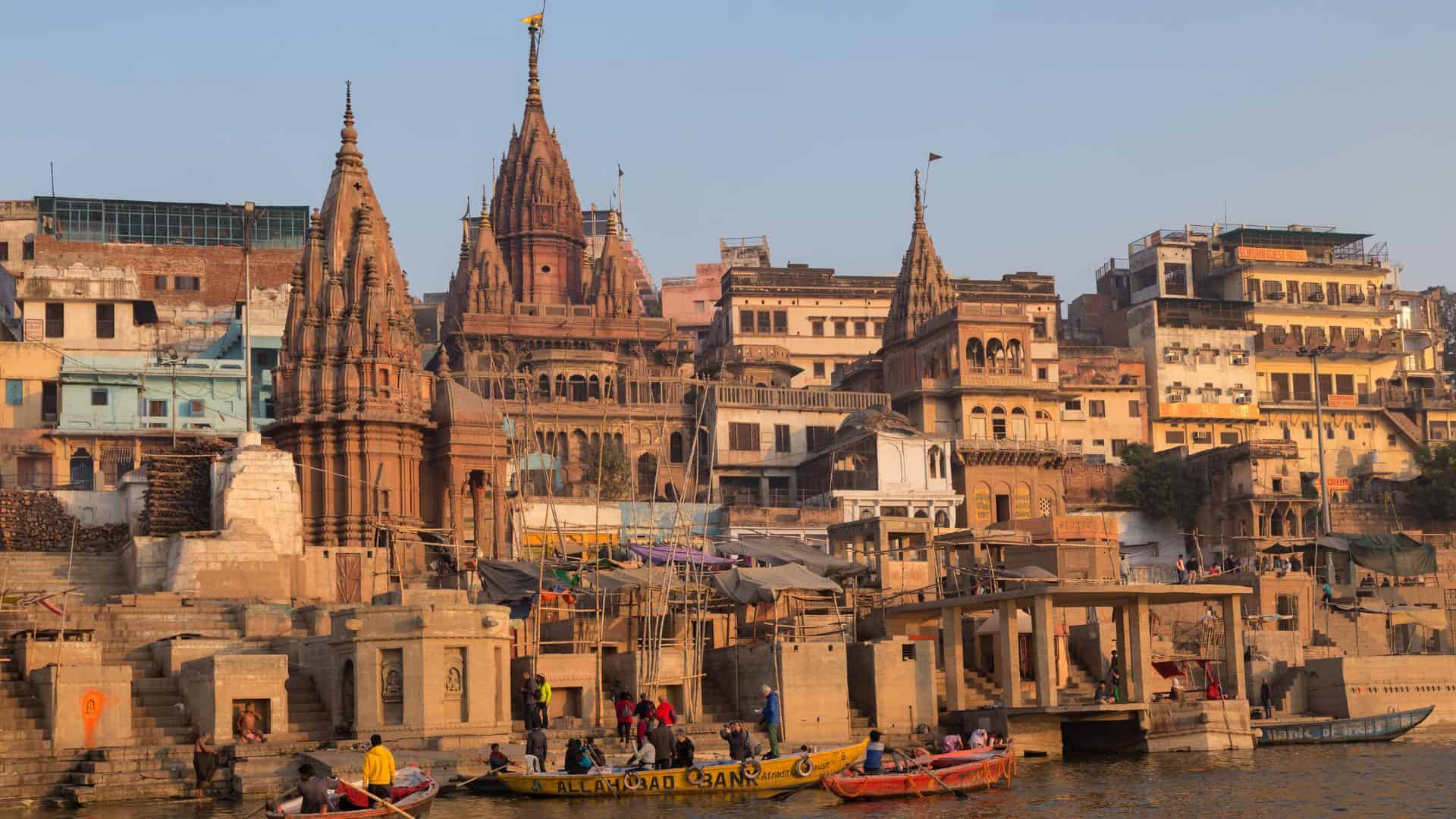
The tradition knows it. In the days of the fortnight, water is offered — poured out with cupped hands, given to the earth, to the river, to whoever is thirsty. Food is set aside. The name is spoken aloud. At the ghats of Banaras and in the villages along the Ganga plain, the offering is plain: rice, water, a lamp, a little sesame. Not a feast. An acknowledgement. We did not begin here.
So what did they leave us, besides a debt? Their habits. The way they argued, the way they ate, the way they feared the dark, the way they loved. This is the inheritance nobody can value and everybody carries. It comes to us in the tone of a voice, in the shape of an evening, in a phrase we use without knowing where we learned it. The fortnight asks us to look at that as well — and to be grateful for whatever in it kept us warm.
There is a mood that belongs to these days, and it has a name: shraddha. Faith, trust, the willingness to give before you can see the return. Nobody checks the soil the same evening. You water the seed because the season is the season for watering.
Gratitude Is a Practice
Gratitude is not a feeling that arrives. It is a discipline of noticing.
We are trained in claiming credit and in assigning blame — two directions of the same forgetting. The good weather, the raised child, the body that still works, the work that paid. All of it filed, quietly, under our own cleverness.
Gratitude is not the sweetening of the past. It is the refusal to be the first person to forget.
So it becomes a practice. Small and repeatable.
- Offer water. To the river, to the earth, to the person who needs it.
- Say the name aloud. A name is how a line is held.
- Give something away, and do not arrange to be thanked.
What the Ghats Hold
Banaras keeps the pyres. The smoke goes up and the river takes what is given to her. She has been doing this longer than anyone can date, and she does not argue with what she receives. She takes in all, purifies all, and keeps moving.
Around her, the living go on with the living. Alms are given at the ghat. The bells keep their hours. The dead are not a separate country. They are only further downstream.
The Line Continues
It is said that on these days the ancestors are nearest. It is also said that they never left. They are in the hands we were given, in the eyes we see with, in the way we speak when nobody is listening — in how we cook, how we wait, how we treat a person who can do nothing for us.
We are not the end of the line. We are the part of it that is still speaking.
Let us speak carefully.