How many times have you stepped onto a mat and gone straight for the pose?
Most of us have. The shape is familiar, the body knows it, and it is a good way of avoiding the question of whether you have actually arrived.
The old teachers start somewhere else. They start with the breath.
The Body Is Not Yet Here
A posture is an instruction to the body. The breath is an instruction to the whole person.
Pranayama, the practice of working consciously with the breath, is where the tradition begins — not because breathing is easy, but because it is the one place where body and mind can meet without argument. The mind will follow the breath. That is the fact on which the whole practice rests.
Two Doors, One Breath
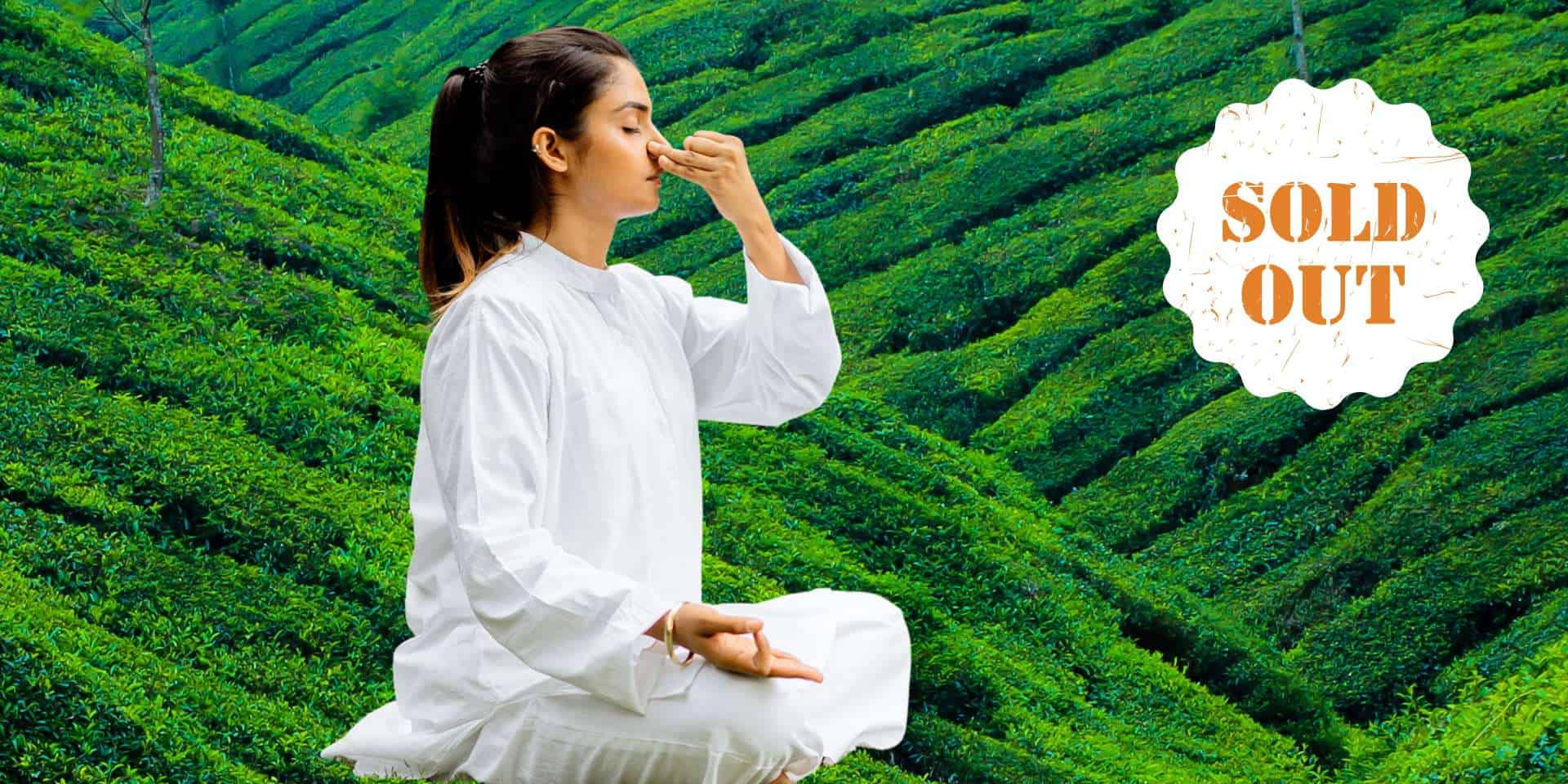
Nadi shodhana, the alternate-nostril breath, is among the simplest of the pranayamas and one of the oldest. The right thumb rests on the right nostril, the ring finger on the left.
- Close the right nostril. Inhale through the left.
- Close the left, open the right. Exhale slowly through the right.
- Inhale through the right.
- Close the right, open the left. Exhale through the left. The circle closes.
Left in, right out. Right in, left out. The count is not the point, though tradition asks for equal on both sides, and equal is a fair idea. The point is that your hand is on your nose and your mind is where the breath is.
Most beginners hurry the exhale. The exhale is where the body is actually asked to do something — to let go on a schedule, to release the ribs, to stop bracing for whatever is coming next. Give the exhale more time than the inhale and the nervous system will take the hint.
When the two sides balance, many find a quiet in the body that is hard to reach any other way. The Hatha Yoga Pradipika places the cleansing of the nadis — the subtle channels — before the deepest meditation, and it gives a reason.
A Bridge, Not a Place to Live
In the Yoga Sutras of Patanjali, the practice is described as the stilling of the fluctuations of the mind. The breath is where you catch them. When the breath is scattered, the mind will follow it out of the room. When the breath is long and even, the mind has nowhere to go but back.
A bridge is not somewhere you live. But you cannot cross without it.
Where the Practice Actually Starts
There is a moment in a class when the breath work ends and the body begins to move. It is a small hinge. Some people reach for the first shape too eagerly and the hinge swings shut — they are back in the doing, and the breath is forgotten along with the rest of the morning.
Dhyana, meditation, is what all of this is in service of. Not the kind where you sit cross-legged for an hour while the mind writes its shopping list. It is the brief calm state in which nothing needs to be done, and in which, if you stay, something is noticed that was not there before.
The postures that follow are built to carry you there rather than away. Sun salutations, the standing work, the long seated holds — all of it is scaffolding around a still centre. Which is why the order matters. The breath first. Then the body. Then the stillness.
So — the hand on the nose. Before the pose, before the sequence, before the counting. Ten quiet minutes. Then the body believes you have arrived, and only then does it begin to move.
And do it where the practice will be difficult, not only where it is easy. The breath is the same breath in the kitchen at six in the morning as it is on the mat.