The lamp is small. The night is not.
Mahashivratri — the great night of Shiva — asks for one thing only. That you stay awake. Not with coffee and cinema. With attention. Through the cold hours, when the temple is lit and the river is black and the whole world has gone to sleep except you, and the one you are keeping vigil for.
The Still One
Shiva is strange, if you have been thinking of the divine as a kind and generous grandfather. The Puranas tell of him as the one who withdraws. The ascetic. The unmoving. He does not chase and he does not explain. He holds.
The lingam, standing in its plain cylinder of stone, is the shape of that. No face, no limbs, no story. A form with nothing to hide and nowhere to go.
The whole night is kept in the Shiva temples. The lingam is anointed with milk and water and honey, the bell is rung, the lamps burn low, the singing goes on hour by hour. None of the gestures are large. A vigil is not carried by grandeur. It is carried by attention repeated until it becomes a place you can live in.
The Upanishads point at the same thing, though they do not give it a name — that which remains when the mind has gone quiet, unchanging, pure awareness. Shiva is that stillness given a name so that it can be loved.
Awake Is Not Enough
Keeping the eyes open is easy. Keeping the awareness awake is the practice.
Most of us sleep through the vigil. Not only at night. We sleep through the whole inner life — through the thoughts that would have told us something, through the stillness that would have shown us who we are when nothing is performing. The vigil is not only a night to be kept. It is the discovery of how little of you is actually awake.
And the morning after is strange. Thin. The mind is not rested but cleared, and everything that seemed urgent the night before has quietly lost its claim on you.
- Sit with the breath and count the exhalations, and lose the count, and begin again. Nothing else.
- When the mind wanders, do not scold it. Note that it wandered, and come back.
- Let the small hours be small. The hour before dawn does not have to be dramatic to be holy.
The Hunter in the Tree
It is told that a hunter, caught in the forest after dark, climbed a bilva tree to keep safe and stayed awake all night. To keep from sleeping he plucked leaves and let them fall. Below him, unseen, stood a lingam, and the leaves fell on it until dawn. The Puranas say he was blessed for a worship he never knew he was offering, because he stayed awake.
That is the whole teaching of the night. Shiva does not ask for money, or temples, or a clean birth. He asks for a few leaves let fall in the dark. Attention. Unreserved.
The Vigil Inside
We keep the night for him. But the night was always also inside us — those hours of our own darkness, when we do not want to look and cannot look away.
Shiva as pure awareness does not sleep. Neither can that.
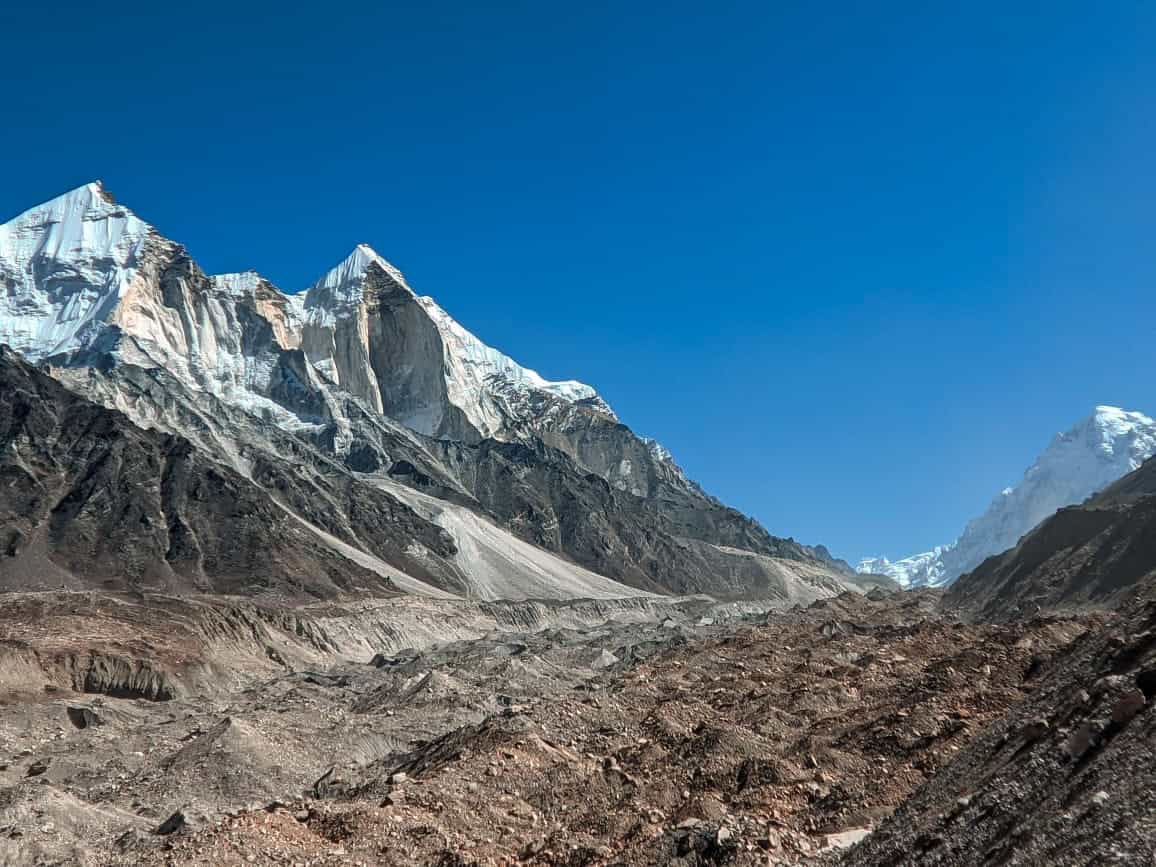
High above the valley the Shivling stands white and unlit — a third kind of vigil, one that needs no lamp and no effort. The mountain has been keeping watch since long before any of us arrived.
Stay awake, then. Not for the festival, and not for the merit, but because you have finally remembered that there is something in you which does not sleep, and it has been waiting all night for you to notice.