Before you eat, wait.
Not for long. For the length of one breath — one slow breath, while the plate is in front of you and the day is still behind you. It is a small pause, and it changes the meal more than any recipe.
What Sattvic Means
Sattvic comes from sattva, that which is pure, clear, luminous. Sattvic food is food that leaves the mind clear. It is light, easily digested, not too oily, not too hot, not too sharp. It does not sit in you afterwards like a fog.
The seventeenth chapter of the Gita speaks of food that is fresh, nourishing, agreeable to the body and good for the mind. That is the whole brief. Nothing exotic. Rice, dal, vegetables, fruit, milk, a little ghee if you eat it. Simple food, well made.
The same chapter names three kinds of food. One clarifies. One inflames. One dulls. The sattvic is the first, the one that leaves you able to think, and it has never needed to be expensive to be good.
Food is the most constant thing we take into the body. What we eat becomes the material of our thinking — our energy, our mood, our capacity to sit still. This is not a rule. It is a fact of the body, and the body is honest.
The Table Is A Practice
Cooking is one of the great meditations and nobody calls it that. Heat, salt, timing, attention — a simple act that asks you to be present for the length of it. While you cook, you cannot be elsewhere. That is the whole gift.
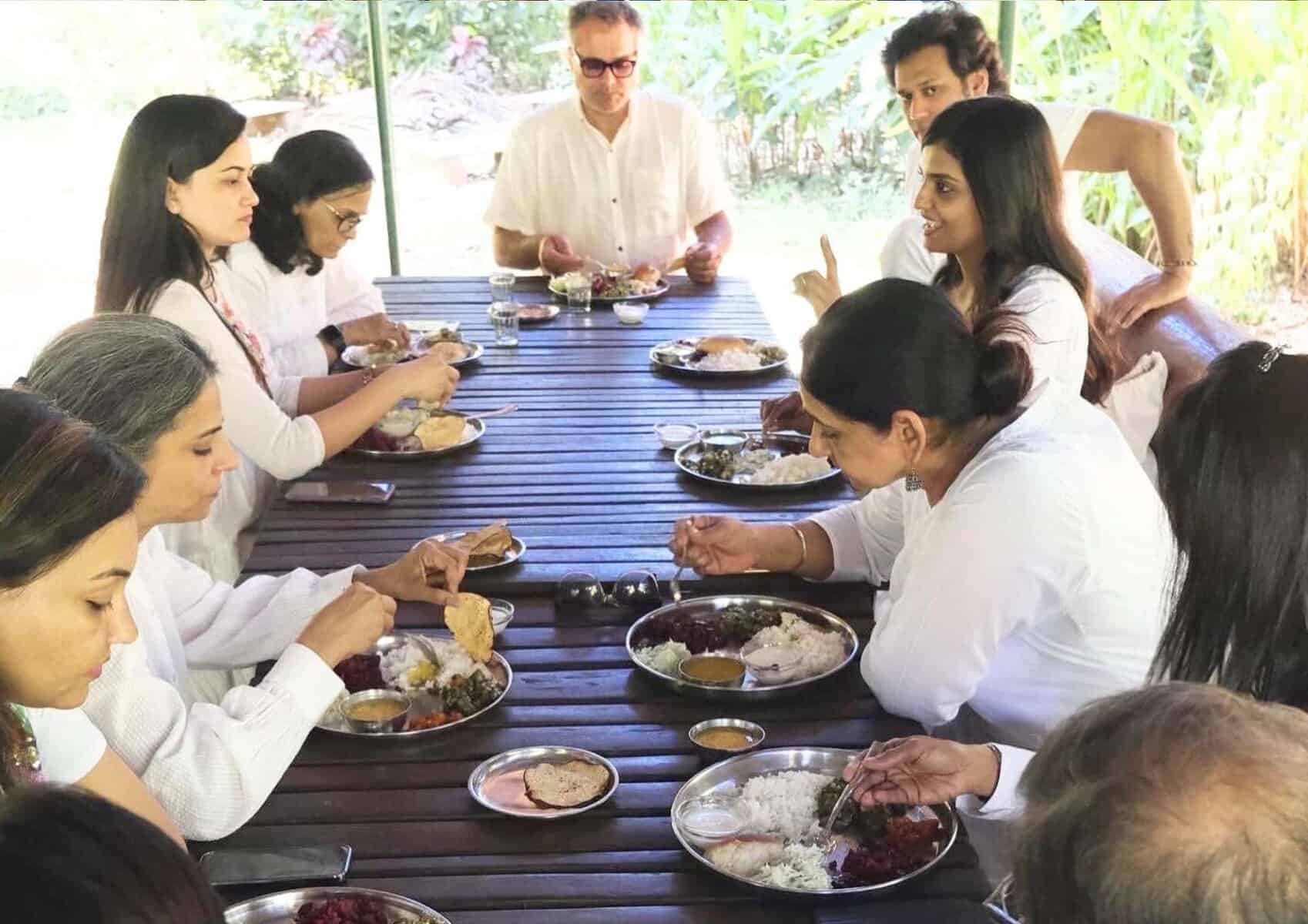
And eating in company changes what is eaten. At a table with other people the pace slows. You notice what is in front of you. You stop minding the bowl. Something in the sharing of a meal makes it easier to stop when you are full.
A long table of strangers is one of the oldest arrangements in the world. Nobody sits down to it alone.
- Eat simply. Fresh, light, little.
- Eat slowly enough to taste what is in front of you.
- Eat with people. The table makes the discipline easier than the will does.
Gratitude Before The Meal
Before the first mouthful, name one thing you are grateful for that day. Not the whole list. One. The person who cooked it. The rain that made the rice. The road that brought you here.
Gratitude is not a politeness added to the beginning of the meal. It is the moment the meal stops being fuel and becomes an offering.
The old teaching is plain: what goes in becomes what comes out. Food becomes the substance of the body, and the substance of the body becomes the material of the mind. What we take in shapes the quality of the awareness that receives it.
Food That Does Not Disturb
Sattvic food is not a rule about purity. It is a question of fit. Too much, too heavy, too late at night, and many find the mind is less settled afterwards. What we eat becomes how we think. What we think becomes how we live.
A sattvic kitchen is not a rulebook. It is a kindness to the mind you will have to use tomorrow.
So cook with attention. Eat with attention. Share what you have with whoever is at the table, and with whoever is not.
A meal is a small, daily, unremarkable practice — the kind that, done quietly, over years, changes the person doing it.